
On this page
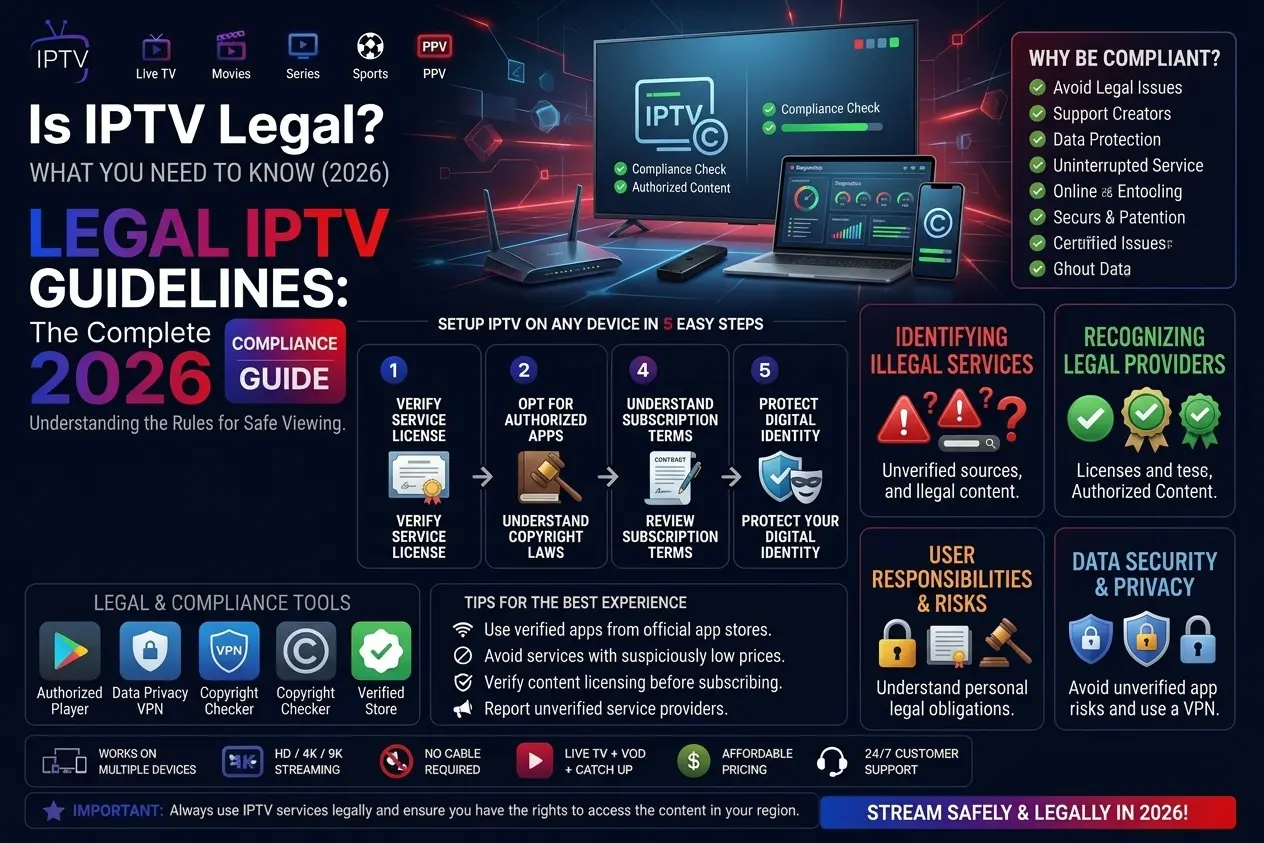
Short answer: IPTV technology is legal — it is simply television delivered over the internet, and major services like YouTube TV, Hulu + Live TV and Sling TV use it. Whether a particular IPTV service is legal depends on whether it has the rights to the content it streams.
IPTV is a technology, not a content source
IPTV (Internet Protocol Television) describes how TV is delivered: over the internet instead of cable or satellite. The same delivery method is used by licensed streaming platforms and by unlicensed ones. So “is IPTV legal?” is really two questions: is the technology legal (yes), and does this provider have the rights to what it offers?
What actually determines legality
- Licensed services stream content they have permission to distribute.
- Unlicensed services stream copyrighted content without those rights, which is a copyright issue.
- The delivery is identical in both cases — the difference is entirely about content rights.
Is IPTV legal in the USA?
Streaming television over the internet is legal and common in the United States. Licensed IPTV-style platforms such as YouTube TV, Sling TV and Hulu + Live TV operate openly. Legal concerns only arise with providers that distribute content without proper licensing agreements.
Content licensing rules differ between countries. This article is general information, not legal advice. For questions about your own situation, speak to a qualified professional where you live.
Are IPTV apps legal?
Yes. IPTV Smarters Pro, TiviMate, XCIPTV, IPTVX and similar apps are media players sold or distributed through official app stores. They contain no TV channels; they show whatever you connect with your provider’s login. The legal question applies only to that content source.
What to check before you subscribe
- A real business presence: working contact details, clear policies, responsive support.
- Transparent pricing — be wary of prices that look too good to be true.
- A trial or refund policy that shows the provider stands behind the service.
- Consistent service over time, not a site that appears and disappears.
- Terms that forbid re-streaming and sharing, and a DMCA process for copyright complaints.
More checks in how to choose an IPTV provider. Our own policies are public: terms, refund policy and DMCA policy.
IPTV legality: questions
Is IPTV illegal in the USA?
No — IPTV as a technology is legal in the USA, and licensed services like YouTube TV, Sling TV and Hulu + Live TV use it. Legal problems arise when a provider streams copyrighted content it has no rights to distribute.
Are apps like IPTV Smarters and TiviMate legal?
Yes. They are media players available on official app stores and contain no channels themselves. The legal question only concerns the content source you connect them to.
Can I get in trouble for using IPTV?
Enforcement, when it happens, usually targets providers that distribute unlicensed content rather than individual viewers. Laws and enforcement differ by country, so this is general information, not legal advice.
Why is IPTV cheaper than cable?
Internet delivery avoids the cost of cable networks, satellite infrastructure, set-top boxes and installers. Be careful with prices that look impossibly low, though — see how to choose a provider.